
When my daughter struggles to understand why her cousin got upset during game night, or when she can’t quite express why she’s frustrated, I’m reminded that emotional literacy isn’t something that comes naturally to every child—especially those with special needs, autism, or ADHD.
That’s exactly why we created our latest social story: “Understanding My Emotions with Siblings and Cousins.”
What Makes This Social Story Different
As a parent who’s watched my daughter navigate the complexities of social interactions, I know that traditional explanations often fall short. Kids need concrete examples, visual cues, and repetition in a format they can actually understand.
This social story does three things exceptionally well:
1. It Meets Kids at Their Reading Level
Written at an intermediate level, this story uses simple, direct language that children can actually comprehend. We’re not talking down to them, but we’re also not overwhelming them with vocabulary that’s beyond their grasp. Each sentence is clear, actionable, and relatable.
2. It Uses Real Scenarios Kids Experience Daily
The story doesn’t deal with abstract concepts. Instead, it focuses on situations every child faces:
Feeling happy while playing board games together
Getting frustrated when siblings want to play something different
Feeling sad or angry when someone takes their toy
Learning to share and include others
These aren’t hypothetical situations—they’re the exact moments when emotions run high and kids need strategies the most.
3. It Provides Actual Scripts Children Can Use
Here’s what I love most: instead of just telling kids to “be nice” or “share your feelings,” this story gives them the exact words to use:
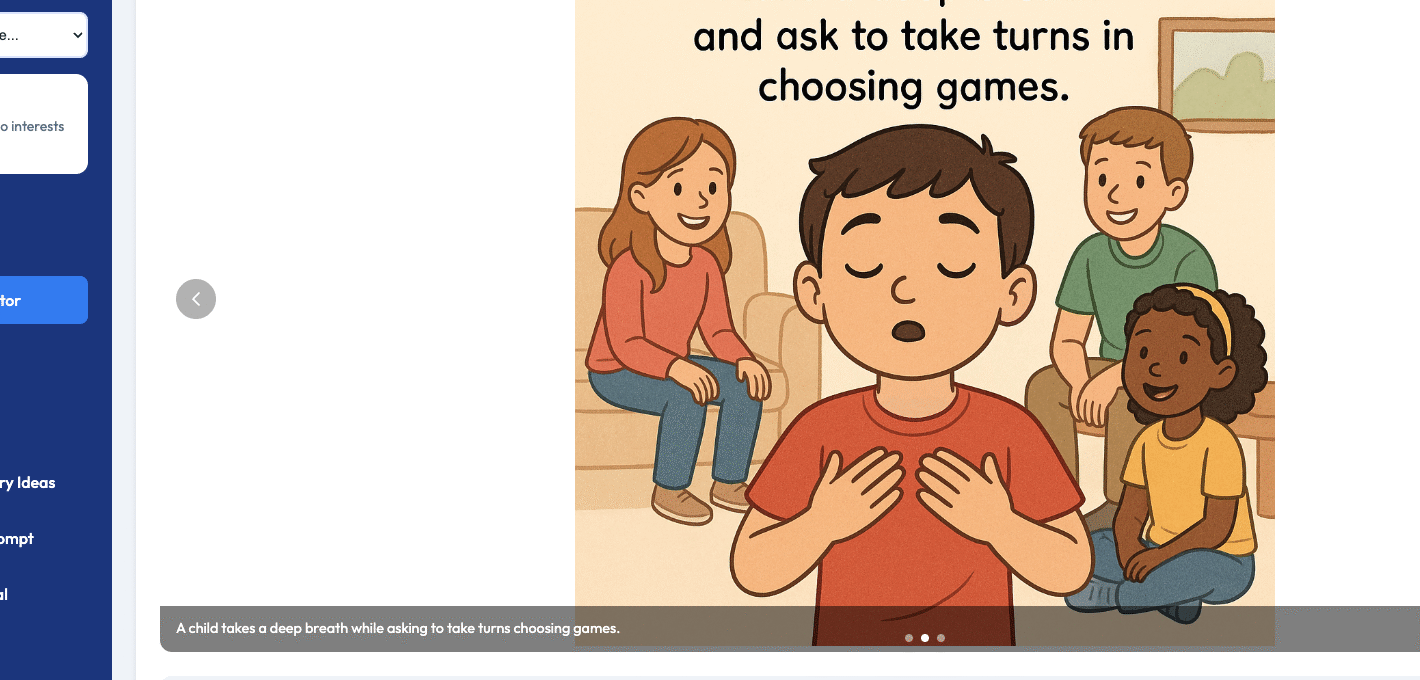
“Can we take turns choosing games?”
“I don’t like it when you take my toy. Can I have it back, please?”
“Let’s play together!”
For children who struggle with spontaneous language or emotional regulation, these scripts are gold. They provide a roadmap when emotions feel overwhelming.
The Science Behind Social Stories
Social stories work because they:
Pre-teach social situations before they happen
Reduce anxiety by making expectations clear
Build empathy by explaining how others feel
Provide coping strategies in concrete, memorable ways
Research shows that children with autism and ADHD particularly benefit from this structured approach to learning social skills. The repetition, visual support, and clear expectations help bridge the gap between knowing what to do and actually doing it in the moment.
How to Use This Social Story with Your Child
Here’s my recommendation based on what’s worked with my own daughter:
1. Read it together regularly – Not just once. Make it part of your routine, especially before playdates or family gatherings.
2. Point out the illustrations – The visual cues help children connect emotions with facial expressions and body language.
3. Practice the scripts – Role-play the scenarios. Let your child practice saying the words in a safe environment.
4. Use it as a reference – Keep it accessible. When a real situation arises, you can reference back to the story: “Remember what we learned about taking deep breaths?”
5. Reinforce with the comprehension questions – The included questions help ensure your child is actually absorbing the concepts, not just memorizing words.
Beyond the Story: Building Emotional Intelligence
This social story is just one tool in a larger toolkit. The final page includes a “Social Cues Guide” that helps parents and educators understand:
What social cues to watch for in others
Common misunderstandings children have about emotions
Practice scenarios to try at home
These additional resources turn a single reading session into an ongoing learning opportunity.
The Bottom Line
Teaching emotional intelligence to children with special needs isn’t about fixing them—it’s about giving them the tools to navigate a world that can feel confusing and overwhelming. Social stories like this one provide structure, clarity, and confidence.
My daughter still struggles sometimes. She doesn’t always remember to take a deep breath before reacting. But having this framework—having words she can reach for when her emotions feel too big—has made a real difference.
And that’s what we’re all looking for as parents: tools that actually work, resources that meet our kids where they are, and hope that they’re building skills that will serve them for life.
SocialTales-understanding-my-emotions-with-siblings-and-cousins
Leave a Comment