
Picture this: It’s the first snow day of the season. Your child watches through the window as neighborhood kids team up, laughing and rolling snowballs together. Your child wants to join in, but working with others—the back-and-forth, the sharing, the listening—feels overwhelming. They either hang back alone or try to take over completely, and either way, the experience ends in frustration instead of fun.
If this sounds painfully familiar, you’re not alone.
The Hidden Struggle Behind “Just Play Together”
We often tell our kids to “work together” or “be a team player,” but here’s what we sometimes forget: collaboration isn’t instinctive for many children with autism, ADHD, or special needs. It’s a complex dance of social skills that other kids seem to pick up naturally, but our children need to learn step by step.
Think about what teamwork actually requires:
♦ Listening to someone else’s instructions without getting distracted or defensive
♦ Taking turns instead of doing everything yourself or withdrawing completely
♦ Watching and imitating what others are doing
♦ Celebrating shared success instead of needing to be the star
♦ Asking to help instead of waiting to be invited
For neurotypical children, these skills blend together seamlessly during a simple activity like building a snowman. But for our kids? Each step is a separate challenge that needs to be named, practiced, and reinforced.
Meet Sam and the Narrator: A Story About More Than Just Snow
That’s why we created “Building a Snowman Together”—a social story that breaks down teamwork into manageable, observable steps through an activity every child loves.
This isn’t another generic “be nice” lesson. It’s a guided experience where your child can see exactly what successful collaboration looks like in real time.
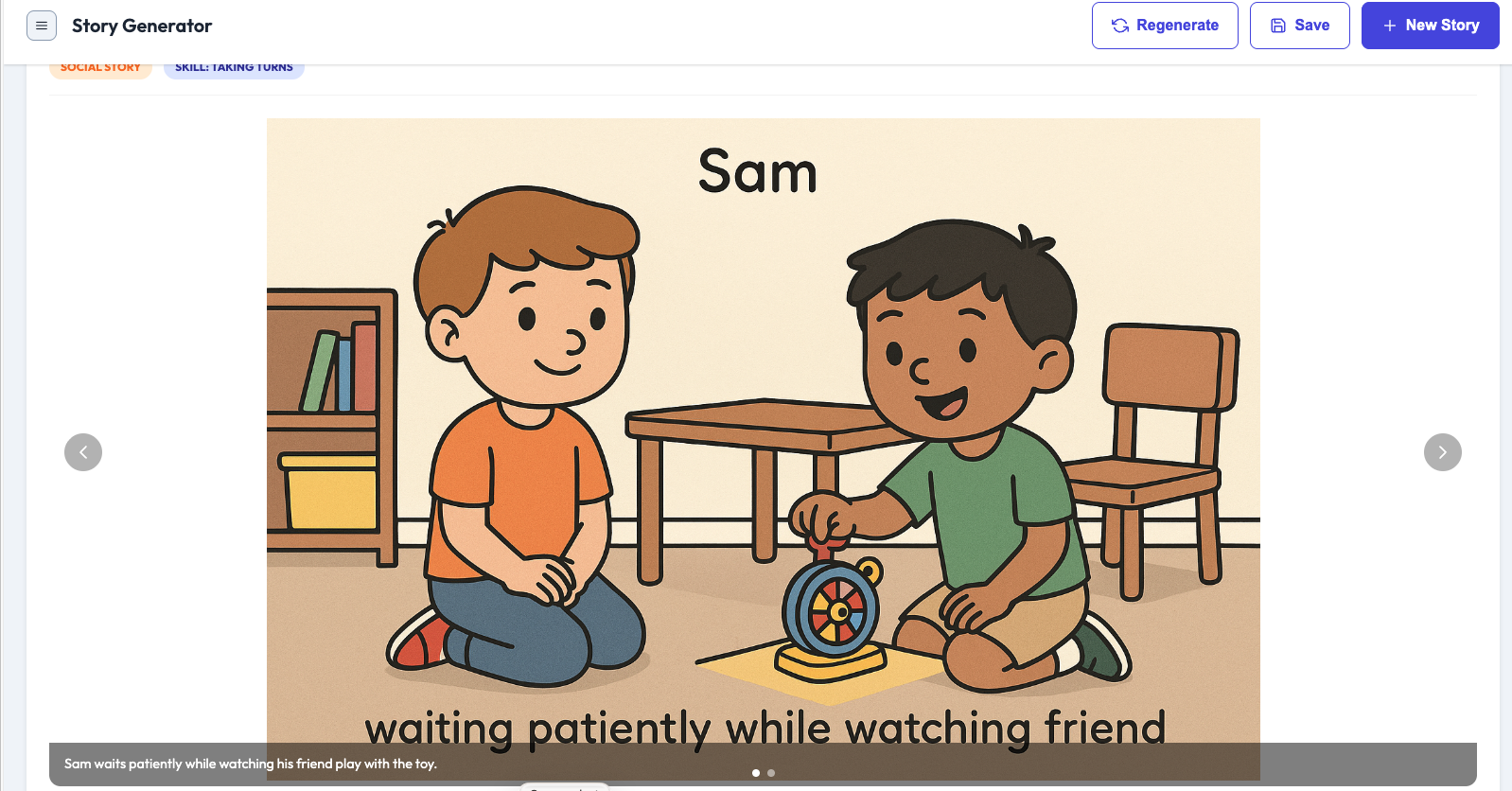
The story follows a child building a snowman with their big brother, Sam. But here’s what makes it powerful—it doesn’t just say “they worked together.” It shows your child exactly what that looks like:
♦ Sam smiles and explains (“First, we roll the snow into big balls”)—teaching that good team members communicate clearly and kindly
♦ “I watch Sam carefully and try to do the same”—modeling observation and imitation skills
♦ “I feel happy when my snowball grows big and round”—celebrating small successes along the way
♦ “Sam helps me place the snowballs on top of one another”—showing that asking for and accepting help is a strength, not a weakness
♦ “I learn that teamwork makes building a snowman more fun”—connecting the experience to a takeaway lesson
♦ “I feel accomplished knowing we did it together”—emphasizing shared success over individual achievement
Why This Story Actually Works (When Other Methods Haven’t)
Here’s what makes this different from the team-building activities that have left you both frustrated:
It’s concrete, not abstract. Instead of vague directives like “cooperate,” your child sees specific actions: rolling snow, watching carefully, placing sticks for arms. They can picture themselves doing these exact things.
It names the emotions. Throughout the story, feelings are explicitly labeled: “I feel excited,” “I feel happy,” “I feel proud,” “I feel accomplished.” This emotional vocabulary helps your child identify and communicate their own feelings during collaborative activities.
It shows a positive model. Sam isn’t a perfect sibling—he’s simply a patient, clear communicator. Your child can see that being a good team member doesn’t mean being the best or knowing everything; it means smiling, explaining, helping, and celebrating together.
It normalizes needing guidance. The narrator doesn’t instinctively know how to build a snowman—they learn from Sam. This gives your child permission to be a learner, not an expert, in social situations.
Beyond Reading: Tools That Build Real Skills
But here’s where this resource becomes truly transformative. The story is just the beginning. Included with it are practical tools that turn a one-time read into lasting skill development:
♦ Social Understanding Questions that test comprehension and emotional awareness (“How does the narrator feel when their snowball grows big and round?”)
♦ Key Social Concepts highlighted—teamwork, listening, helping—with clear social rules like “listen to instructions,” “work together as a team,” and “take turns”
♦ A Comprehensive Social Cues Guide that teaches your child to recognize facial expressions (smiling for happiness, frowning for disapproval), body language (nodding shows agreement, crossed arms suggest defensiveness), and tone of voice
♦ Common Misunderstandings explained—like mistaking concentration for anger, or silence for disinterest
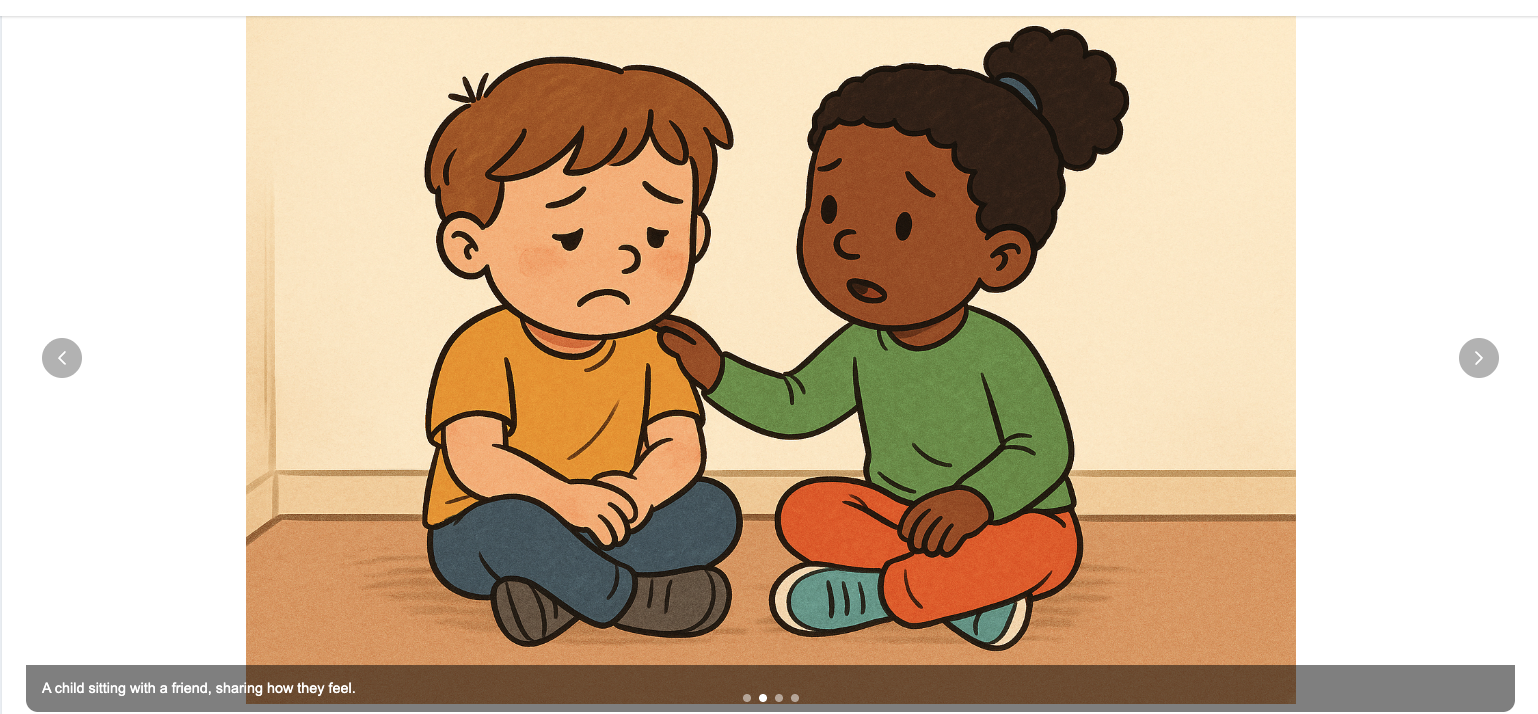
♦ Practice Scenarios for real-life situations: joining a playground game, reading with a partner, group activities in class, helping an upset peer
These components work together to create a complete learning system that goes far beyond the snowman scenario and applies to any collaborative situation your child will face.
The Breakthrough Moment You’ve Been Waiting For
Imagine the next time there’s fresh snow on the ground, and instead of struggling alone or melting down when things don’t go their way, your child walks up to a sibling or friend and says, “Can you show me how?”
Imagine them listening patiently while another child explains the plan, then actually following through.
Imagine them lighting up with pride not because they did it perfectly, but because they did it together.
That’s not just teamwork. That’s social confidence. That’s the foundation for friendships, classroom participation, family relationships, and eventually workplace collaboration.
And it starts with a simple story about building a snowman.
Your Next Step (Before the Next Snowfall)
Winter is here, and with it come countless opportunities for your child to practice working with others—building snow forts, decorating cookies, wrapping presents, preparing for holiday gatherings. But these opportunities can turn into battlegrounds if your child doesn’t have the skills to navigate them.
You don’t have to face another snow day hoping this time will be different. You don’t have to watch your child struggle while other kids instinctively collaborate.
You can prepare them. You can give them a clear, visual roadmap for what teamwork actually looks like. You can practice together in a low-pressure way before the real moment arrives.
The “Building a Snowman Together” social story is ready for you right now. Download it, print it, and read it together before bed tonight. Read it again tomorrow. Do the practice scenarios together. Talk about the questions. Role-play asking for help and taking turns.
Because every child deserves to experience the joy of creating something with another person—not despite their differences, but with support that meets them exactly where they are.
Download the full social story here and give your child the gift of collaboration this winter:
[Building a Snowman Together: Social Story for Children with Autism & Special Needs]
Let’s Talk: Your Experience Matters
What’s your child’s biggest challenge when it comes to working with others? Have you found activities that help them practice teamwork in a way that actually sticks? Drop a comment below—your insights might be exactly what another parent needs to hear today.
About EZducate: We create adaptive learning tools and social stories specifically designed for children with special needs, autism, and ADHD. Every story is crafted with real families in mind—because we’re parents too, and we know the difference the right tools can make. ⬇️ DOWNLOAD YOUR FREE SOCIAL STORY BELOW ⬇️ Building a Snowman Together Social Story for Autism and ADHD