We had been doing Reading Interventions for a few weeks. My daughter was practicing consistently. Progress was happening. But I kept noticing something strange. She could read “said” perfectly on Monday. By Wednesday, she stared at it like she had never seen it before. Same word. Same child. Completely gone.
This happened over and over. We would practice a word. She would get it right multiple times. I would think “finally, she has it.” Then two days later, it was like we had never practiced it at all.
Sitting there watching her struggle with the same words again and again, I felt helpless. The Reading Interventions were helping with practice structure. But something was still not clicking. Words were not sticking. I needed to understand why.
At our next meeting with the reading specialist, I brought it up. “Why do words disappear? She knows them one day and they are gone the next. What are we missing?”
That is when she mentioned something I had never heard in any IEP meeting before. Orthographic mapping.
The way she explained it, orthographic mapping is how the brain stores words permanently. Not just memorizes them temporarily. Actually files them away so they become automatic. For most kids, this happens naturally. For kids like mine, it needs explicit practice.
When she said that, everything clicked. All those vanishing words. All that practice that seemed to evaporate. My daughter’s brain was not mapping words automatically. She was just holding them in short-term memory until they faded away.
Suddenly, I understood the actual problem. And more importantly, I understood we could do something about it. Let me explain what I learned in regular parent language, not specialist talk.
When your child reads a new word, their brain needs to connect three things together. The sounds they hear. The letters they see. The meaning of the word. Those three pieces need to link up and stick together permanently. Most kids make these connections quickly and automatically. Their brain maps the word once or twice, and it sticks forever. They see “cat” a few times and their brain files it away. Done. Automatic. But for kids with dyslexia or reading struggles, this mapping process does not happen automatically. Their brain needs way more repetitions. Way more explicit practice connecting sounds to letters to meaning. Without that explicit mapping practice, words stay in short-term memory. They can recall them for a day or two with effort. Then the memory fades. The word disappears. That is why “said” vanished between Monday and Wednesday. My daughter had not actually mapped it. She had just held it in short-term memory long enough to pass the practice session.
This explained so much about our struggles. Flashcards where she just looked at words and said them? Not mapping. She was using visual memory, which fades quickly. Reading the same book over and over? Not mapping. She was memorizing the story and guessing words from context. Spelling lists where she studied all week then forgot everything after the test? Not mapping. Just cramming into short-term memory. None of these were actually helping her brain create permanent storage for words. No wonder nothing stuck. She needed practice that explicitly connected sounds to letters. That made the mapping process visible and hands-on. That repeated each word enough times for her brain to actually file it away permanently.
Traditional practice was not designed for brains that do not map automatically.
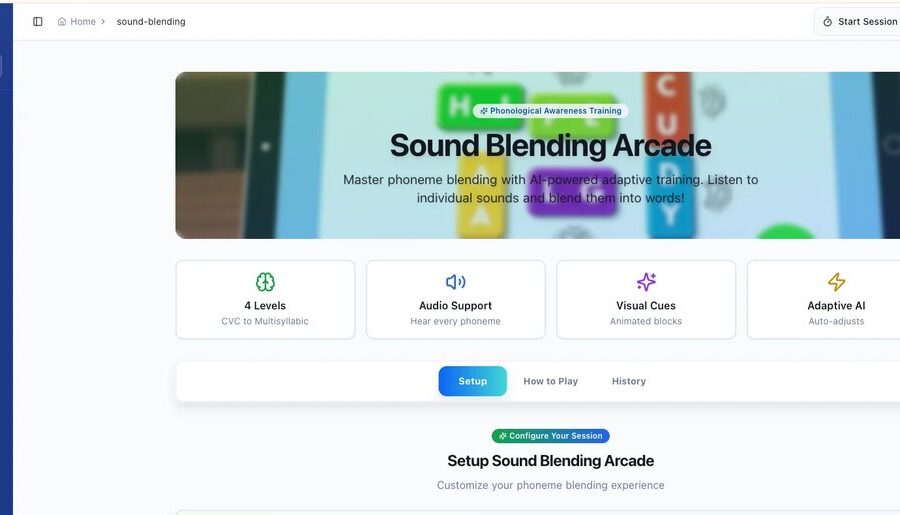
Understanding orthographic mapping changed how we thought about reading practice entirely. So we built something different. Not just another reading exercise. An actual orthographic mapping lab where kids could see and feel the mapping process happening. When you open Orthographic Mapping in EZread, the setup is simple. You choose your child’s age group. The system suggests appropriate word difficulty. You pick how many words to practice and what topics interest them. Then the AI goes to work selecting perfect words for mapping practice. Not random words. Words specifically chosen based on your child’s age, reading level, and interests. For my daughter, I chose the eleven to thirteen age group with complex words. Topics about feelings and nature since those interested her. Ten words per session. About twenty minutes of practice.
Here is where it gets good. Each word appears as a mystery. Three question marks. Your child hears the word but does not see it yet. Then they get available sounds. Not letters. Sounds. This is crucial. Mapping happens at the sound level, not the letter level.
Their job is to drag sounds in order to build the word. This forces their brain to think about each sound separately. To connect what they hear to what they see. To map it explicitly instead of guessing.
When my daughter practiced “giraffe,” she had to think. G sound. Then I sound. Then R. Then A. Then the F sound. Then the silent E at the end. Seven sounds. Seven deliberate choices. Seven mapping moments.
After building the word, she checks her answer. If correct, the system celebrates. “Perfect Mapping!” An example sentence shows the word in context. The meaning connects to the sounds and letters. If incorrect, she sees which sounds are wrong. She tries again. No shame. No failure. Just another mapping attempt.
The Letter Guide at the bottom shows her the individual sounds for reference. Visual scaffolding so she is not guessing blindly. Session Progress tracks which words she has mastered. She can see her collection growing. Proof that words are sticking now.
We have been using Orthographic Mapping for two months now. The difference is real.
First, words are staying put. When my daughter maps a word through this practice, it sticks. She can read it days later. Weeks later. Even months later. “Said” is not disappearing anymore. Neither are “friend” or “because” or any of the other tricky words that used to vanish overnight. Her brain is finally filing words permanently instead of holding them temporarily.
Second, reading is getting less exhausting. When words are stored permanently, she does not have to work so hard to recall them. They just appear automatically when she sees them. Before, every word required effort. Decoding. Sounding out. Guessing from context. Her brain was working overtime. Now, mapped words pop up instantly. That mental energy goes to comprehension instead of decoding. Reading feels less like a battle.
Third, she is not avoiding reading anymore. When words stick, practice feels productive instead of pointless. She can see progress. She can feel words becoming automatic. That builds confidence. Belief that reading is learnable, not impossible. Hope that she can actually get better at this. This shift in mindset matters more than anything else.
This Is Science Made Practical
I need to be clear. his is important to understand. Orthographic Mapping is not a cure for reading difficulties. It is one piece of a bigger puzzle. A tool that helps brains that need explicit instruction build permanent word storage. But struggling readers need many pieces working together, not just one. However, understanding orthographic mapping changed everything about how we approach reading. We are not just doing more practice. We are doing the right kind of practice. Practice that actually helps her brain store words permanently. Practice that builds automatic word recognition instead of temporary memory.
The science finally makes sense. More importantly, the science actually works.
Every parent dealing with reading struggles needs to understand orthographic mapping. Because traditional practice methods assume automatic mapping. They are not designed for brains that need explicit, repeated sound-to-letter connections.
If your child practices words but they disappear. If spelling never sticks. If reading stays exhausting despite tons of practice. Their brain probably needs explicit mapping work.
Understanding this gives you power. You stop blaming your child for “not trying hard enough.” You stop blaming yourself for “not practicing enough.” You understand the actual problem and can address it directly. Orthographic mapping practice works. It helps brains that do not map automatically create permanent word storage. It makes reading achievable instead of impossible.
Something Still Puzzled Me
Even as orthographic mapping practice helped my daughter store individual words, I noticed something.
She would learn “play” and “playing” and “played” as three completely separate words. Same with “help,” “helpful,” “unhelpful,” “helper.” Each one required full mapping practice like they had nothing to do with each other.
That seemed inefficient. Why was her brain not recognizing the connections? Why was she not seeing word families and patterns? That question led me to the next piece of the puzzle. Something called morphology. Understanding how words are built from meaningful parts.
When I learned about morphology, reading suddenly made even more sense.
Next in this series: How my daughter discovered words have families, and why that changed everything about reading.