A Parent’s Story :
I need to be upfront about something before I share this story: EZducate, and EZRead is our platform. Our team built this because my daughter struggles with reading. So yes, I have skin in the game.
But this isn’t a sales pitch. This is me, as a parent, sharing what finally worked for my kid after years of watching her fall further behind.
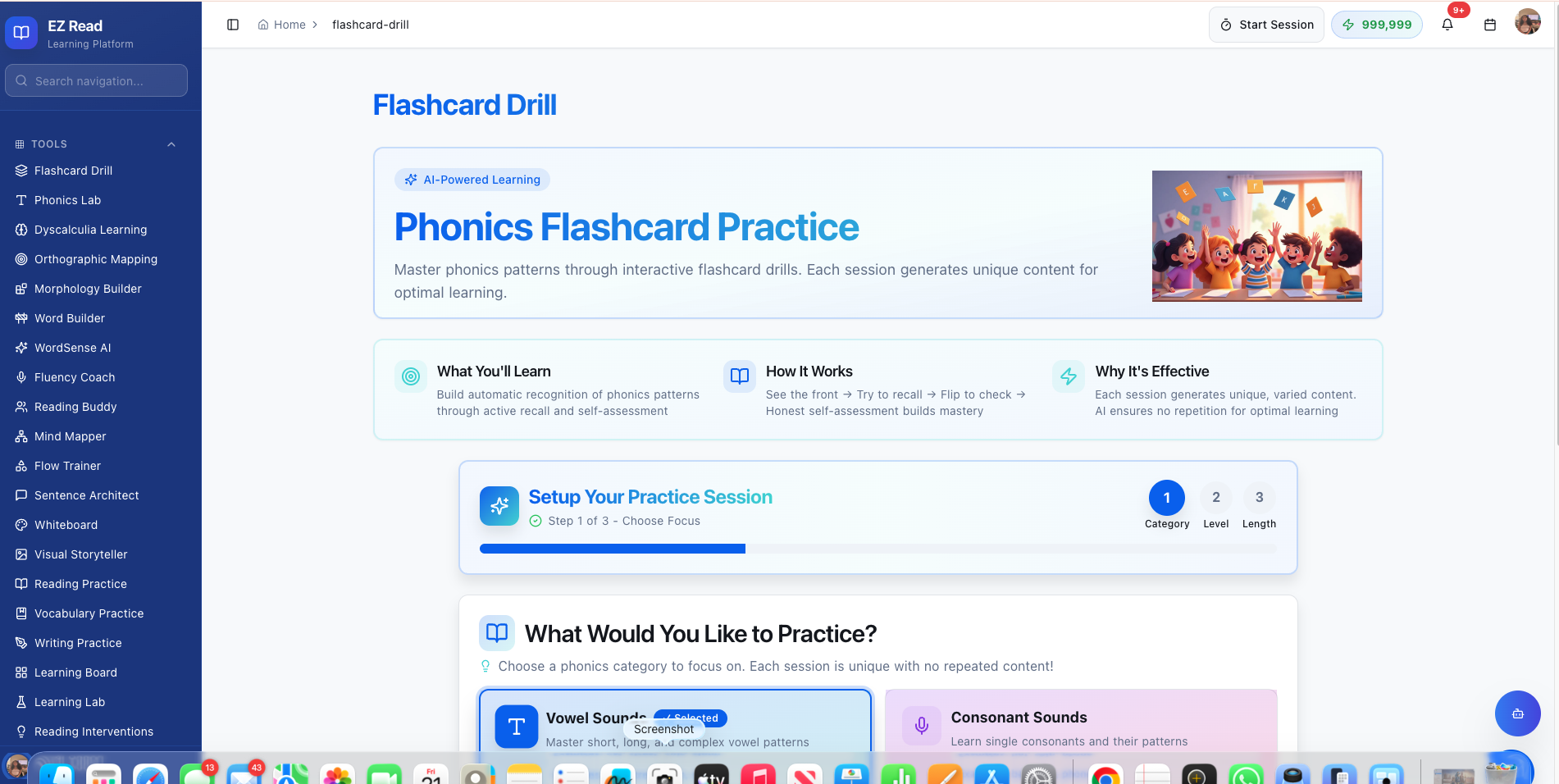
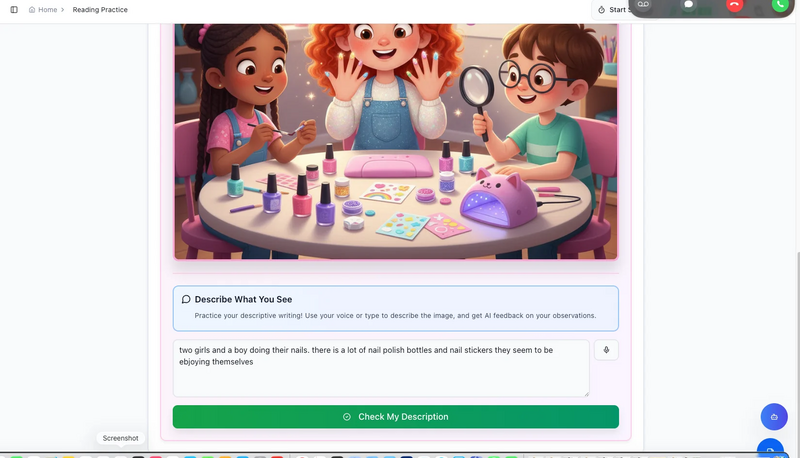
My daughter is in eighth grade and her vocabulary is at a second-grade level. I’ve tried everything – tutors, therapy, rewards, consequences, every app on the market. Our team at EZducate literally built an entire educational platform trying to help kids like her. She’s used every tool on EZRead – the AI Reading Stories, the Vocabulary Builder, the Reading Buddy, all of it. Some helped more than others.
We even used IEP Tools to track her goals, making sure we were aligned with what her school was working on.
But something was still missing. And it wasn’t another tool.
The Moment Everything Changed
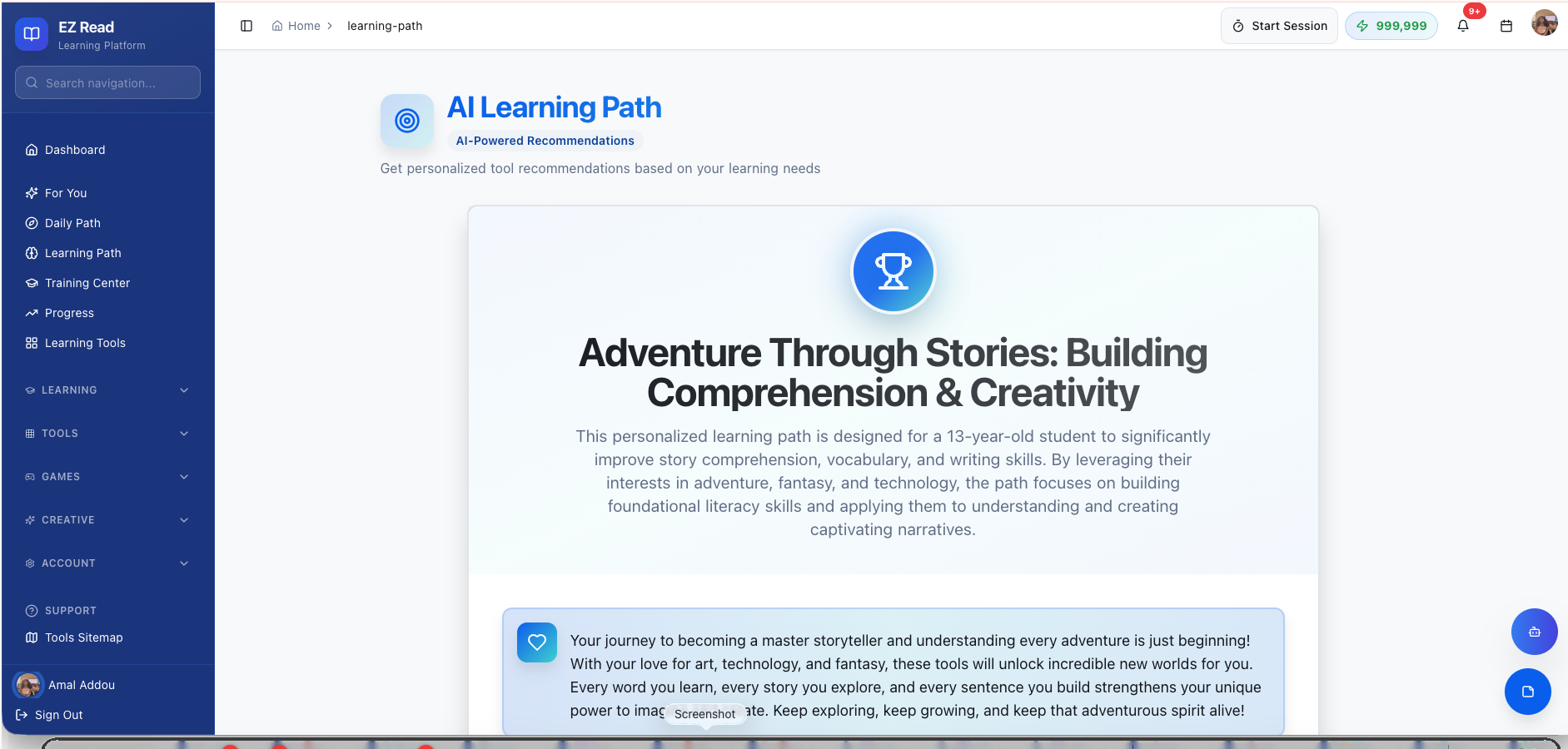
We just added a new feature to EZRead – the AI Learning Path. It lets kids create their own personalized learning plan(if the can). I asked my daughter if she’d try it. Not as a beta tester. Just as my kid. She sat down and went through the questions: What are your goals? What interests you? What do you want to work on? How much time can you commit?
And for the first time in her learning journey, I stepped back completely. I didn’t guide her answers. I didn’t suggest what she should pick. I just let her respond honestly.
She chose adventure stories and technology themes because that’s what she loves. She picked the areas where she knew she needed help – understanding stories, remembering what she read, expressing her ideas in writing. She decided on 20 minutes a day because that felt doable to her.
The AI generated a four-week plan just for her, using the tools on EZRead in a way that made sense for her goals. For the first time, this wasn’t my plan for her. It wasn’t her teacher’s plan. It wasn’t even following her IEP goals exactly. It was her plan for herself.
The Routine She Built (All on Her Own)
Here’s what blows my mind: she created her own routine, and she sticks to it.
Every day when she comes home from school, she follows the same pattern:
♣ Changes out of her school clothes
♣ Tidies up her space
♣ Sits down with EZRead for her 20 minutes
♣ Earns one hour of computer time
I didn’t create this system. She did.
She made these choices because they were HER choices. The learning path was hers. The schedule was hers. The reward was hers.
What Personal Involvement Really Means
Here’s what I realized as both a parent and someone who works with a team that builds educational technology: all those years of me pushing, planning, and managing her learning, I was accidentally sending her a message: “You can’t do this on your own.”
My daughter had already been using every tool on EZRead. She’d worked with the AI Reading Stories. She’d practiced with the Vocabulary Builder. She’d had conversations with the Reading Buddy. All good tools. All helpful in their own way.
But they were tools I chose for her. Goals I set for her. A schedule I managed for her.
When she built her own Learning Path, the message changed to: “You know what you need. You can figure this out.”
And I watched something shift in her.
The AI Learning Path gave her:
♣ Goals she actually cared about – not just what was in her IEP, but specific targets like “Master 10 new vocabulary words from stories I love”
♣ Tools she chose herself – she picked from the EZRead tools based on what she knew would help her
♣ A timeline she could commit to – 20 minutes felt doable to her, not overwhelming
♣ Milestones worth celebrating – rewards that actually excited her, like choosing a new fantasy book or planning a museum visit
She’s doing all the same activities she was doing before – reading AI-generated stories, building vocabulary, discussing with the Reading Buddy, working on sentence structure. But now? She chose them. She organized them. She committed to them.
The Difference Between Compliance and Commitment
Before, my daughter was complying. She’d do the work because I told her to, but her heart wasn’t in it.
Now? She’s committed. There’s a huge difference.
She sits down to work because she wants to hit HER goals. She’s tracking HER progress. She’s building HER skills.
I’m not saying every day is perfect. But most days? She does her 20 minutes without me even mentioning it. Because it’s not about me anymore.
What This Means for Your Family
If you’re in the trenches right now – fighting about homework, watching your child shut down, wondering if anything will ever click – I want you to know something as both a parent and someone who’s spent years working with our team to build tools to help; Sometimes the answer isn’t finding the perfect tool. It’s finding a way to let your child own their journey.
Our team at EZducate had built every tool my daughter needed. She had access to adaptive stories, vocabulary builders, comprehension activities, writing support – everything. But until she could choose how to use them, until she could build her own path, something was missing.
The Learning Path feature did something I couldn’t do as her parent. It gave her a structured way to take control. It asked her the right questions without my voice in her head. It created a plan that felt like hers, not mine.
Here’s the truth: we had used IEP Tools before this to organize her goals. It helped us stay aligned with her school plan. But those were still our goals for her, goals we were tracking.
Now? She’s tracking her own progress. She’s hitting her own milestones. She’s building her own skills.
For the first time in years, she’s not just learning to read better. She’s learning that she’s capable of setting goals and achieving them. She’s learning that she has agency in her own education.
That’s bigger than any reading score. And it’s bigger than any tool our team could have built for her.
How the Learning Path Actually Works
Let me break down what happened when she created her plan, because the structure matters:
Week 1: She started with the basics – AI Reading Stories for comprehension, Vocabulary Builder to learn new words, and Reading Buddy to discuss what she read. Just 15 minutes a day. Foundation building.
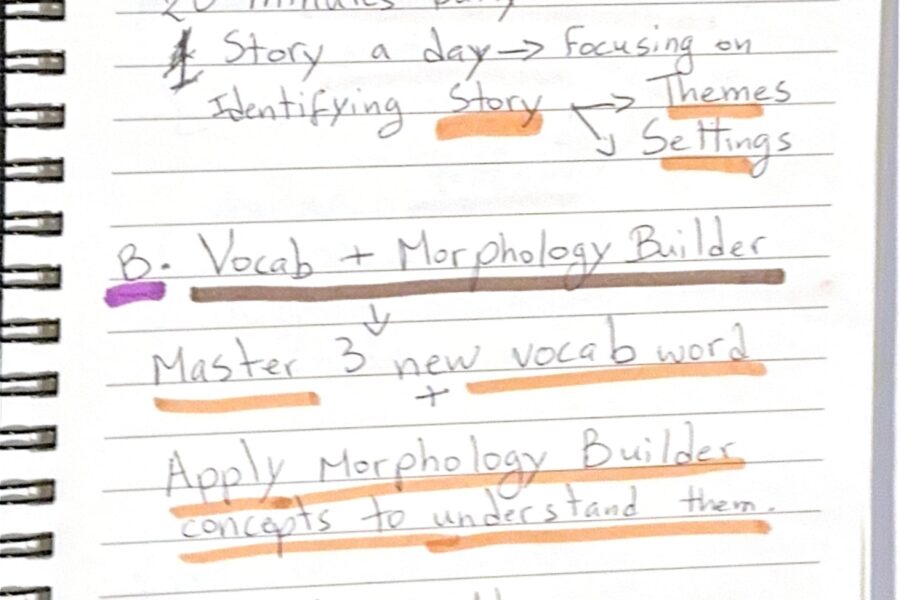
Week 2: She added Morphology Builder to work on prefixes and suffixes. The time increased to 20 minutes. She was ready for it because she chose it.
Week 3: She brought in Sentence Architect to work on her writing. Still 20 minutes, but now using five different tools strategically.
Week 4: Consolidation week. Reviewing everything she learned, reinforcing the skills, building confidence.
Each week had clear goals:
♣ Complete 3-4 stories with good comprehension
♣ Master 10-15 new vocabulary words
♣ Engage in specific Reading Buddy discussions
♣ Complete targeted exercises in the other tools
And here’s what I love: she knows exactly what she’s working toward. Not vague “get better at reading” goals, but concrete milestones she can actually achieve and measure.
The system even suggested rewards she’d actually care about – choosing a new fantasy book, visiting an art museum, starting a creative writing project. Things that matter to her.
From One Parent to Another
I know this might sound like a pitch coming from someone whose team built the platform. But I’m not writing this to sell you something. I’m writing this because after years of trying everything – as a parent, as someone who works with a team that creates learning tools – this is what finally worked.
Creating her own Learning Path made everything click.
She comes home now, changes out of her school clothes, tidies up her space, and sits down with EZRead for 20 minutes. Then she gets her hour of computer time.
I didn’t create this system. She did.
She made these choices because they were her choices. The learning path was hers. The schedule was hers. The reward was hers.
She’s actually doing better. Not just in her metrics, but in her attitude. She’s more confident. She’s more consistent. She’s owning her progress.
There are still hard days. Reading Comprehension is still challenging for her, and it probably always will be. But she has something now she didn’t have before: belief in herself.
What I’d Tell You If We Were Having Coffee
If you asked me for advice – parent to parent, not as someone trying to sell you something – here’s what I’d say:
Let go of control. This is the hardest one. I had to stop myself from jumping in when she was answering the AI’s questions. Let your child make their own choices, even if you’d choose differently.
Trust their routine, even if it seems weird. My daughter has to change her clothes and tidy up before she starts. Is that necessary? Who cares. It’s her ritual. It works for her.
The reward system has to be theirs. Don’t impose your rewards. Let them pick what actually motivates them. Computer time works for my daughter. Something else might work for yours.
Consistency beats perfection. Some days she’s not feeling it. That’s okay. The 20 minutes still happen because she committed to herself, not to me.
Celebrate the ownership, not just the progress. Yes, her reading is improving. But the bigger win is watching her take responsibility for her own learning.
If You Want to Try This
I’m obviously biased because our team at EZducate built this. But we also built it because nothing else worked for my kid.
If you want to try the AI Learning Path with your child:
♣ Let them go through the setup themselves
♣ Don’t hover or guide their answers
♣ Trust the plan they create, even if it’s different from what you’d choose
♣ Support their routine without managing it
♣ Give it a real shot – at least the full four weeks
Your child might surprise you. Mine certainly surprised me.
And if it doesn’t work? That’s okay too. Not every tool works for every kid. That’s why we keep building different approaches.
But ownership? That works for everyone. And sometimes you need the right structure to make ownership possible.
A Final Thought
I should mention something else – our team at EZducate also created a program for behavior challenges, and it made a huge difference with my daughter. Any parent with older kids will tell you this: every age comes with its own totally different problems. But here’s the thing – I’m actually delighted to be facing age-appropriate problems with my kid now. When she was first diagnosed, I didn’t dare think about future challenges because everything looked so doom and gloom. The fact that we’re dealing with normal teenage stuff alongside her reading work? That’s a victory in itself. That’s worth more than anything we could have engineered.
If you want to see the actual plan the system created for her, My Daughter’s Personalized Learning Path – Real Example this is what came out of that 5-minute setup process.