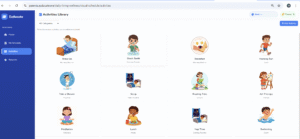

In our family, a visual schedule app for daily routines has been life-changing. We don’t just use it for our daughter with autism—we use it for both of our kids. The result? More structure, fewer arguments, and much happier days.
Visual schedules help children understand what they need to do in a day without constant reminders. They make our home calmer, reduce screen-time battles, and give our kids independence. For my autistic daughter, they’ve been especially powerful—she loves rules, thrives on structure, and enjoys checking off her schedule to stay accountable.
For my neurotypical child, they’ve been just as effective—because honestly, what child doesn’t benefit from a little structure?
What Is a Visual Schedule App for Daily Routines?
A visual schedule app for daily routines shows kids their daily tasks through pictures and words. Instead of parents repeating “brush your teeth” or “do your homework” over and over, the schedule lays it out clearly.
A simple morning might look like this:
-
Wake up
-
Brush teeth
-
Eat breakfast
-
Get dressed
-
Pack school bag
The app becomes the “coach,” which means parents don’t have to nag, and kids can take ownership of their day.
Why We Use Visual Schedules for Both Kids
At first, we introduced visual schedules for our autistic daughter. However, we quickly realized they benefit everyone in the family:
-
Fewer screen-time arguments → The app makes it clear when iPad or TV is allowed.
-
No more nagging → Kids check the app, not us.
-
No forgotten tasks → Everything’s right there.
-
Built-in accountability → Tokens and rewards keep them motivated.
-
Happier kids overall → Expectations are clear, so there’s less tension.
As a result, routines became smoother and our home more peaceful.
How a Visual Schedule App for Daily Routines Helps Kids with Autism
For my autistic daughter, visual schedules have been life-changing. They reduce her stress by showing what comes next, give her independence because she can check the schedule herself, and provide the regular routine she thrives on. Rewards motivate her, and following step-by-step rules is something she truly enjoys.
Most importantly, these benefits are backed by research. The CDC highlights that educational strategies and behavioral approaches—like visual supports—are among the most effective ways to help children with autism build daily living skills and confidence (CDC: Treatment and Intervention for Autism Spectrum Disorder).
Making Visual Schedules Fun
One reason the app works so well is that it turns routines into something enjoyable. Our kids:
-
Collect tokens for completed tasks.
-
Trade tokens for rewards like snacks, movie night, or playdates.
-
Celebrate small wins every day.
In addition, the system keeps accountability high without making it feel like work.
Real-Life Example from Our Family
Here’s how our schedule looks in action:
-
Morning routine → Both kids wake up, brush teeth, and get ready without reminders.
-
Homework → Built right into the schedule—no excuses.
-
Screen time → Clearly defined, no more endless debates.
-
Bedtime → Kids follow the steps themselves, which makes evenings calmer.
For my autistic daughter, it’s about structure and independence. Meanwhile, for my neurotypical child, it’s about accountability and responsibility. For us as parents, it means less stress and more peace.
How Visual Schedules Build Life Skills
A visual schedule app for daily routines teaches more than just chores:
-
Time management → Understanding order and timing.
-
Accountability → Taking responsibility for daily tasks.
-
Independence → Learning to complete tasks without being told.
-
Executive function → Practicing planning and follow-through.
As a result, children gain skills that will serve them long after childhood—in school, at work, and throughout life.
Why We Built Visual Schedules Into EZducate
When we created EZducate, we knew visual schedules had to be part of it.
With EZducate’s app, families can:
-
Customize schedules with real-life pictures and tasks.
-
Adjust as kids grow or routines change.
-
Pair schedules with fun rewards.
-
Encourage independence while reducing stress at home.
Visuals are the backbone of learning for many kids, especially those with autism. That’s why EZducate also includes flashcards to improve communication and vocabulary, as well as social stories to support social interaction.
A Parent’s Perspective
Visual schedules have transformed our home. For my autistic daughter, they provide structure and confidence. For my neurotypical child, they build responsibility. And for us, they replaced chaos with clarity.
I can honestly say: I can’t imagine parenting without them.
Final Thoughts
A visual schedule app for daily routines may look simple, but its impact is huge. It helps children stay organized, reduces family stress, and builds lifelong skills.
For our family, it’s been a game-changer. That’s why we made it part of EZducate—so other families can experience the same clarity, independence, and joy.