
If you’ve ever tried to explain to your child why they need to change their clothes or why that smell matters, you know how challenging it can be. I get it—I’ve been there too. The blank stares, the resistance, sometimes the full meltdown because “these are my favorite pants and I’ve only worn them for three days!”
As a parent of a child with special needs, I’ve learned that traditional explanations often don’t work. Our kids need structure, visual supports, and most importantly, a way to understand the why behind hygiene routines—not just the what.
That’s exactly why we created “Learning About Hygiene”—a social story specifically designed for children with autism, ADHD, and other learning differences.
Why Hygiene Is So Hard for Our Kids (And Why That’s Okay)
Before we dive into the social story itself, let’s talk about why hygiene can be such a battleground for neurodivergent children:
Sensory sensitivities mean they might not notice smells the way we do. That “obvious” odor from unwashed clothes? They genuinely might not smell it.
Executive function challenges make it hard to remember multi-step routines like checking the hamper, sorting laundry, or planning ahead for clean clothes.
Social awareness differences mean they might not pick up on the subtle cues—the wrinkled nose, the step backward—that tell them something’s off.
Routine rigidity can make them resistant to changing clothes they feel comfortable in, even if those clothes desperately need washing.
Understanding these challenges doesn’t mean we accept poor hygiene—it means we approach teaching it differently.
What Makes This Social Story Different
I’ll be honest: I’ve downloaded dozens of hygiene worksheets and social stories over the years. Most of them ended up in the recycling bin. They were either too preachy, too vague, or just didn’t connect with my child’s reality.
Our “Learning About Hygiene” social story takes a different approach:
1. It Starts with a Relatable Scenario
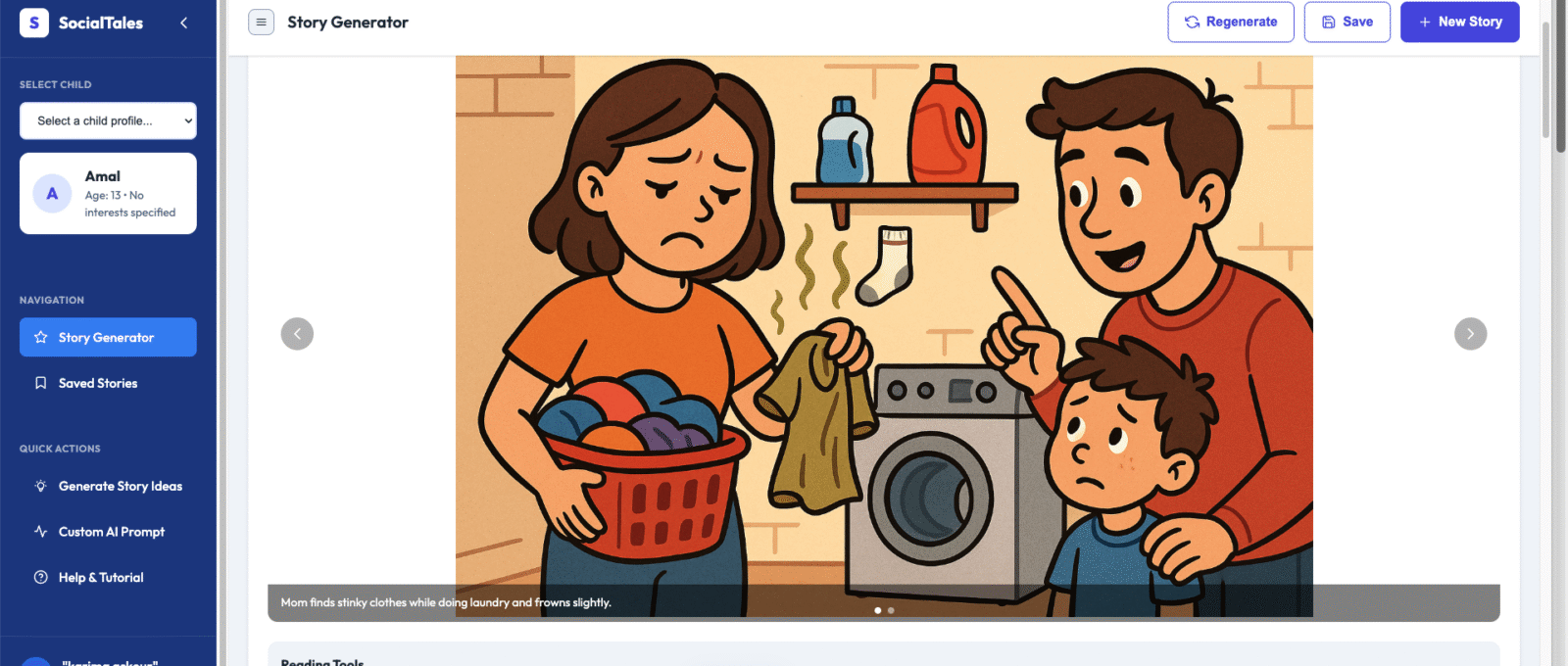
The story begins with a real-life situation: Mom discovers smelly clothes in the laundry. Dad needs to have a conversation. The child feels worried—not because they’re in trouble, but because they genuinely didn’t realize it was a problem.
This is so important. The story validates that our kids aren’t being difficult on purpose. They’re learning, just like the character in the story.
2. It Explains the “Why” Without Shame
Instead of “you’re gross” or “people won’t like you,” the story focuses on positive outcomes:
“When clothes and socks are washed regularly, they smell fresh”
“This helps us feel more comfortable and confident when we’re around others”
“Being clean is an important way to show respect to myself and others”
The emphasis is on self-respect and comfort, not fear or shame.
3. It Provides Concrete Action Steps
The story doesn’t just say “be cleaner.” It gives specific, doable strategies:
Check your hamper to see if it’s time to wash clothes
Practice putting clothes in the hamper every weekend
Ask Mom or Dad for help if you’re unsure
These are actions your child can actually implement, starting today.
4. It Normalizes Asking for Help
One of my favorite lines: “We all forget sometimes.” This is huge for kids who feel like they should already know everything or who are afraid to ask for help.
The story explicitly tells them it’s okay—even encouraged—to ask parents for reminders or help with laundry.
How to Use This Social Story Effectively
Having a great social story is one thing. Using it effectively is another. Here’s what’s worked in our house:
Read It Before There’s a Problem
Don’t wait until you’re frustrated about smelly clothes to introduce this story. Read it together during a calm moment, maybe as part of your bedtime routine.
When the actual situation arises, you can reference the story: “Remember what we read about checking clothes? Let’s try that together.”
Use the Visual Supports
The story includes beautiful, engaging illustrations that show exactly what’s happening. These visuals are crucial for many of our kids who are visual learners.
Some parents print out the images and post them near the hamper as a visual reminder.
Practice the Skills During Low-Stress Times
The social cues guide at the end includes practice scenarios. Use these! Role-play washing hands after the bathroom, covering sneezes, or putting toys away.
When these situations happen in real life, your child will already have practiced the response.
Revisit the Comprehension Questions
The story includes social understanding questions that help reinforce key concepts:
Why did Dad talk about keeping clothes clean?
How did the child feel?
What helps when we wash clothes regularly?
What did the child learn about asking for help?
These aren’t tests—they’re conversation starters that help your child process the story’s lessons.
The Key Social Concepts (And Why They Matter)
This social story targets three critical concepts:
Hygiene
Understanding that cleanliness affects how we feel and how others perceive us. This isn’t about vanity—it’s about health, comfort, and social inclusion.
Responsibility
Learning that we’re responsible for our own bodies and belongings. This is a foundational life skill that extends far beyond laundry.
Respect
Recognizing that our actions affect others. When we maintain hygiene, we’re showing respect for the people who share space with us.
These concepts interconnect beautifully. By teaching hygiene through the lens of responsibility and respect, we’re building character—not just compliance.
Real Parent Wins (The Small Victories That Matter)
Let me share what success looks like with this kind of intervention. It’s probably not what you’d expect:
Success isn’t your child suddenly becoming a hygiene expert overnight. It’s your child remembering to put their gym clothes in the hamper once without being asked.
It’s them asking, “Do these pants need to be washed?” instead of arguing when you suggest changing.
It’s the moment they make the connection between clean clothes and feeling confident at school.
These small wins add up. They’re building neural pathways, creating habits, and fostering independence.
Beyond the Story: Building Sustainable Hygiene Routines
While the social story is a powerful tool, it works best as part of a comprehensive approach:
Create Visual Schedules
Make a simple checklist with pictures showing the weekly routine: check hamper on Saturday, put dirty clothes in basket, help with laundry.
Use Timers and Reminders
Set a weekend alarm labeled “Check Clothes.” Many of our kids respond well to external cues they can rely on.
Make It Sensory-Friendly
If your child resists clean clothes because they’re “stiff” or “smell weird,” try fragrance-free detergent or extra rinse cycles. Sometimes sensory issues are the hidden barrier.
Celebrate Progress
When your child remembers to check their clothes or asks for help with laundry, acknowledge it! “I noticed you put your shirt in the hamper. That’s exactly what we practiced!”
The Social Cues Guide: Your Secret Weapon
Don’t overlook the last page of the social story. The Social Cues Guide is gold for teaching broader hygiene and responsibility skills.
It helps children recognize:
Facial expressions: frowns or looks of disgust that indicate displeasure
Body language: people moving away, covering their nose, or avoiding eye contact
Verbal cues: reminders like “Did you wash your hands?” or “Clean up after yourself”
The practice scenarios are especially valuable. They give you concrete situations to role-play at home, building your child’s awareness in a safe, supportive environment.
Common Challenges (And How to Handle Them)
“My child refuses to read the story.”
Try different formats. Some kids respond better to hearing it read aloud. Others might engage more if they can read it on a tablet. You could even make your own version with your child as the main character.
“The story makes sense to them, but they still don’t do it.”
Understanding and implementation are two different skills. Keep using visual reminders, prompt when needed, and celebrate small steps. Executive function challenges mean they might “know” what to do but struggle with the “doing.”
“They’re embarrassed to talk about hygiene.”
That’s actually developmentally appropriate for older kids! Frame it as a private conversation, use the story as a buffer (“Let’s see what the character does”), and emphasize that everyone—everyone—needs these reminders sometimes.
Why This Matters Beyond Clean Clothes
Here’s the thing: this isn’t really about laundry.
Yes, we want our kids to wear clean clothes. But more than that, we’re teaching:
Self-awareness
Social responsibility
Independence
Problem-solving (What do I do if I’m unsure? Ask for help!)
Cause and effect (My actions affect how I feel and how others respond)
These are life skills that will serve them in every environment—school, future workplaces, friendships, relationships.
When we invest time in teaching hygiene through social stories, we’re not just addressing a current challenge. We’re building a foundation for lifelong self-care and independence.
Getting Started Today
You don’t need to wait for the “perfect moment” to introduce this social story. In fact, the best time is probably right now, before the next hygiene challenge emerges.
Here’s your simple action plan:
Download and read through the story yourself first. Notice the structure, the language, the key concepts.
Choose a calm time to read it with your child. Maybe after dinner or before bed.
Read it together without pressure or judgment. This is learning time, not lecture time.
Discuss the comprehension questions. Keep it conversational.
Identify one concrete action to practice this week. Maybe it’s checking the hamper on Saturday morning.
Set up visual reminders and support systems. Don’t expect them to remember independently yet.
Revisit the story regularly. Repetition builds understanding and habit.
You’re Not Alone in This
If you’re reading this, you’re already doing something so many parents struggle with: actively seeking solutions and supports for your child.
Teaching hygiene to neurodivergent kids isn’t easy. It requires patience, creativity, and often a willingness to try multiple approaches before finding what works.
But with tools like social stories, visual supports, and a lot of understanding, our kids can learn these skills. They might learn them differently than neurotypical kids. They might need more support, more reminders, more practice.
And that’s okay.
Because every child—every person—deserves to feel clean, comfortable, and confident in their own skin. Social stories like “Learning About Hygiene” help make that possible.
Final Thoughts
Hygiene doesn’t have to be a battle. With the right tools, clear explanations, and supportive approaches, it can become just another part of your child’s growing independence.
The “Learning About Hygiene” social story gives you and your child a shared language, concrete strategies, and a judgment-free framework for approaching personal care.
It’s not magic. It won’t solve everything overnight. But it’s a start—and sometimes, that’s exactly what we need.
You’ve got this. And more importantly, your child has got this too—they just might need a little extra support to get there.
Learning About Hygiene Social Story – Autism & ADHD Personal Care Skills
